If you are interested in partnering with us, please get in touch. Using P4I's flexible, innovative tools and diverse global expertise, we are confident we can design a response that is tailored to your needs.

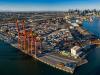


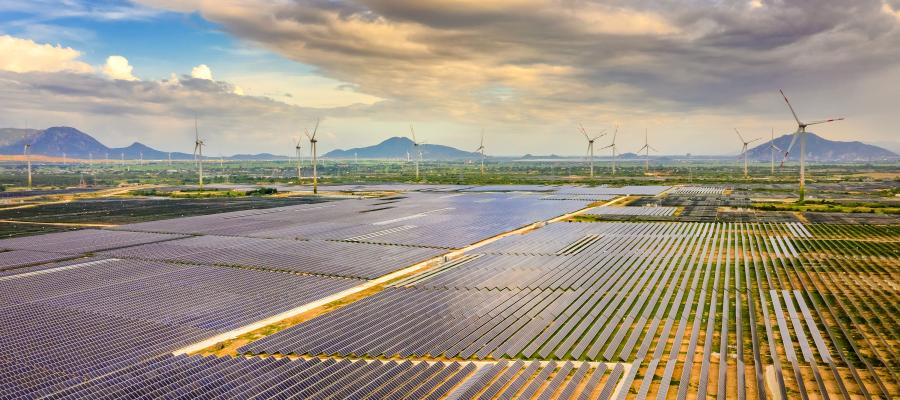
ASEAN has become the world’s fourth-largest energy consumer, with electricity demand growing by over 7 per cent in 2024. Renewable energy is expanding, but fossil fuels still supply about 70 per cent of the region’s electricity. National grids built for centralised generation struggle to integrate renewables and distributed energy resources—creating a major challenge for a clean energy transition.
Despite this, Southeast Asia is responding with ambition, preparing the way for a clean energy future that will support its sustainable growth trajectory.
As Australia marks Australia Day and the International Day of Clean Energy on 26 January, P4I reflects on 5 years of engagement within a collaborative ecosystem of partners—highlighting progress and priorities that will guide the next stage of cooperation across Southeast Asia.
With support from Australian partners, P4I worked with state-owned energy utilities—the critical decision-makers for the clean energy transition—to integrate new technologies, strengthen system reliability, and attract investment. These utilities operate vast infrastructure networks across the region, including EGAT (Thailand), Sarawak Energy and TNB (Malaysia), EVN (Vietnam), EDL (Laos), PLN (Indonesia), and EDTL (Timor-Leste).
Focus areas included:
Australian peer experience has helped shape this progress, offering practical insights from shared challenges and solutions. More than 60 Australian entities including government, non-government and private sector partners engaged with Southeast Asian counterparts through bilateral and ASEAN-level initiatives. Some of the most prominent partners were the Department of Climate Change, Energy, the Environment and Water (DCCEEW), the Australian Energy Regulator (AER), the Australian National University (ANU), and CSIRO, Australia’s national research agency.
In Laos, where seasonal hydropower excess is underutilised, P4I helped develop the foundations for a green hydrogen industry. Technical studies informed a national roadmap, while work with the National University of Laos led to a Master’s degree curriculum, internship placements in Australia, and plans for a centre of excellence—driven by CSIRO and the Mekong Region Futures Institute (MERFI) as knowledge brokers.
Direct twinning has also delivered results for distributed energy. Timor-Leste is adopting the Northern Territory’s Daly River microgrid model, and ongoing exchanges are building engineering and procurement expertise for its first potential project site.
To create better condition for clean energy investment, P4I worked with Southeast Asian governments to shape energy strategies, update legislation, and improve regulatory systems.
For example, Vietnam progressed market and governance reforms to improve planning and investment signals, informed by analysis under the Future of Electricity Vietnam initiative. This work contributed to a new Electricity Law and a revised Power Development Plan VIII (a binding framework for the country's power sector development from 2021 to 2030) as well as a rooftop solar decree enabling households and businesses to sell excess electricity back to the grid.
In Laos, P4I and partners are also supporting the updating of the Electricity Law to improve energy management, increase efficiency and profitability, and make the sector more resilient while ensuring more Lao people can access affordable, reliable, and clean electricity.
Many of Southeast Asia’s energy challenges, and opportunities, are regional in scale. To address this, countries are working through ASEAN to develop shared approaches to long-term planning, decarbonisation and resilience. P4I has supported this cooperation with technical analysis for initiatives such as the ASEAN Plan of Action for Energy Cooperation and the ASEAN Strategy for Carbon Neutrality.
A key priority has been building ASEAN’s own technical capacity to plan its energy future. Through engagement with the ASEAN Centre for Energy, the 8th ASEAN Energy Outlook was produced fully in-house for the first time—an important step toward self-sufficient regional modelling.
This progress has been complemented by region-wide analysis, including an ASEAN pumped hydro energy system assessment, mapping more than 66,000 potential sites. P4I has also supported deeper regulatory cooperation through peer-to-peer exchanges with the Australian Energy Regulator—one of the few bilateral regulators systematically represented at ASEAN-level gatherings including the annual ASEAN Energy Regulators Network meeting and the pilot Summer School for Energy Regulators.
Over the past 5 years, countries have strengthened technical capability, advanced policy and regulatory frameworks, and built shared approaches to regional planning.
Australia, through P4I and its other energy programs, remains committed to continuing working together and supporting Southeast Asia’s journey toward a secure, sustainable, resilient and investment-friendly energy future. Some of the priorities for P4I’s second phase starting in 2026, include expanding integration of low-carbon technologies and storage and progressing necessary system planning and market reforms to attract investment.
If you are interested in partnering with us, please get in touch. Using P4I's flexible, innovative tools and diverse global expertise, we are confident we can design a response that is tailored to your needs.