If you are interested in partnering with us, please get in touch. Using P4I's flexible, innovative tools and diverse global expertise, we are confident we can design a response that is tailored to your needs.

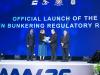
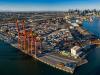
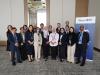
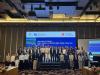


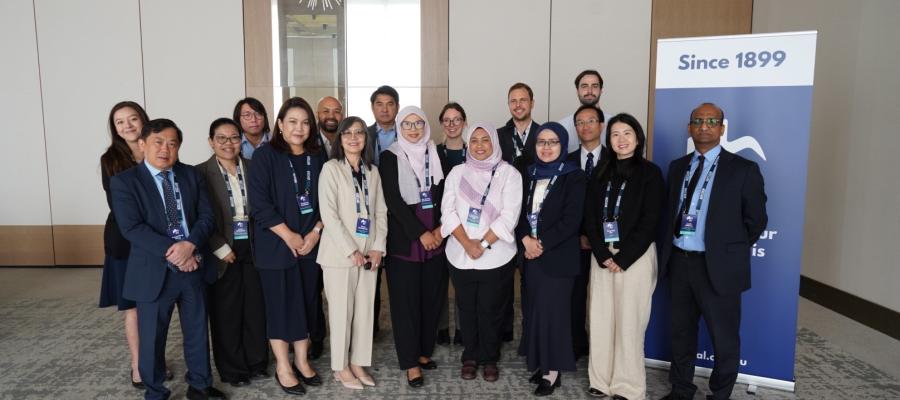
Southeast Asia is home to some of the world's busiest shipping lanes, and its ports and coastal economies are central to the growth ambitions of hundreds of millions of people. At the same time, the pressure to decarbonise is intensifying — driven by tightening international regulations, shifting investor expectations, and the region's vulnerability to fuel shortages and the physical impacts of climate change. This is the challenge that brought delegations from Malaysia, Thailand, Vietnam and the Philippines to Perth for the Maritime Industry Australia Limited (MIAL) Summit (12–13 May 2026). Partnerships for Infrastructure (P4I) was pleased to support their participation, building on strong engagement in recent years.
The Summit reinforced a shared regional priority: navigating maritime decarbonisation in an increasingly complex strategic environment. Discussions centred on global frameworks, the development of green shipping corridors, and the transition to alternative fuels — areas where the pace of change is creating both opportunity and uncertainty for governments and port operators planning long-term infrastructure investments.
Bringing together government, industry and research leaders, the Summit created an opportunity for open and productive dialogue. A roundtable with the Global Maritime Forum (GMF) deepened those conversations further, and delegates were able to contribute valuable on-the-ground perspectives that reflected the complexity of the transition as it is actually being experienced across the region. Two themes stood out. First, the risks associated with infrastructure planning decisions made under regulatory uncertainty — and the very real prospect of stranded assets if investment outpaces policy clarity. Second, the diverse decarbonisation pathways emerging across Southeast Asia, shaped by different national energy mixes, fiscal environments and institutional capacities. There is no single playbook for this transition, and the discussions in Perth reflected that reality.
What the Summit ultimately reinforced is something P4I has long recognised: a more sustainable, resilient and connected maritime future is most effective when pursued collaboratively, not in isolation. Progress on challenges of this scale depends on the quality of relationships as much as the quality of policy — and on governments, industry and research communities being willing to learn from one another rather than work in parallel.
Looking ahead, delegates identified three clear focus areas to drive that agenda forward:
For P4I, the MIAL Summit and GMF roundtable mark an important step in a longer journey. The outcomes from Perth will feed directly into P4I’s ongoing work on maritime decarbonisation — with expanded engagement in the Philippines and continued collaboration across ASEAN to build the frameworks, capacities and partnerships the region needs.
If you are interested in partnering with us, please get in touch. Using P4I's flexible, innovative tools and diverse global expertise, we are confident we can design a response that is tailored to your needs.