If you are interested in partnering with us, please get in touch. Using P4I's flexible, innovative tools and diverse global expertise, we are confident we can design a response that is tailored to your needs.


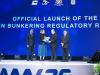
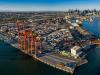
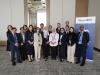


As part of P4I’s short series on industry partner voices from Australia and Southeast Asia, we spoke with Majidah Hashim, Head of Sustainability at the Port of Tanjung Pelepas (PTP) in Malaysia, about what decarbonisation means for the people who keep a port running. Majidah spoke on the workforce dimensions of the maritime transition at the ASEAN Future of Maritime Conference 2026, co-hosted by P4I, the Philippines Department of Transportation and the ASEAN Secretariat. PTP and P4I have been working together on maritime decarbonisation since 2022.
PTP is investing heavily in the transition to a low-emissions future, not only through new technologies but also through the development of its workforce, which is expanding. ‘Whenever we talk about technology and where it’s heading, there’s a real fear that people will lose their jobs, or that some jobs will become obsolete,’ Majidah says. ‘Decarbonisation is not just about the hardware – the alternative fuels and the necessary machinery. It’s also the software, the technology that comes with it, and most importantly the human side.’ Malaysia’s Green Bunkering Regulatory Roadmap (GBRR), developed by the Ministry of Transport with P4I support, mandates that procedures for simultaneous operations (SIMOPS), such as refuelling a ship while cargo is being handled, include comprehensive training and reskilling for all workers involved, in line with P4I’s inclusion plan.
PTP began operating in 2000 and started its transition in 2011, replacing its diesel-powered rubber-tyred gantry cranes (RTGs) with electric models. ‘It quickly became obvious that how the port operated, how people worked, and the resources and support they needed would all change,’ Majidah says. PTP has now fully transitioned to electric RTGs.
Electric equipment carries a high upfront cost, but it is already delivering savings for PTP. ‘With diesel prices fluctuating in recent months, the long-term business case is even stronger,’ Majidah says. ‘The relative cost stability has also supported workforce retention, as fewer financial disruptions help strengthen our operational resilience and provide greater certainty for our people.’
PTP is now electrifying its fleet of prime movers, the trucks that move containers around the port. Of around 600 prime movers in operation, about 54 are now electric, up from two in 2025, with more to follow.
‘Continuous upskilling became essential for everyone, both technical and corporate employees,’ Majidah says. ‘Corporate staff have always expected to keep up with new technology. But in line with wider national efforts to upskill Malaysia’s technical workforce, we put a strong emphasis on training at all levels.’ Through partnerships with academia and industry, PTP has implemented a range of talent development initiatives, including technical certification training and leadership development programs, helping to attract and retain new talent.
This widened the pool of people able to work with new equipment and opened pathways from technical into corporate roles. Workers are now training to drive the new electric prime movers, and safety officers and emergency response teams are building the additional skills that new equipment requires. ‘Learning together has become something people look forward to and want to be part of,’ Majidah says.
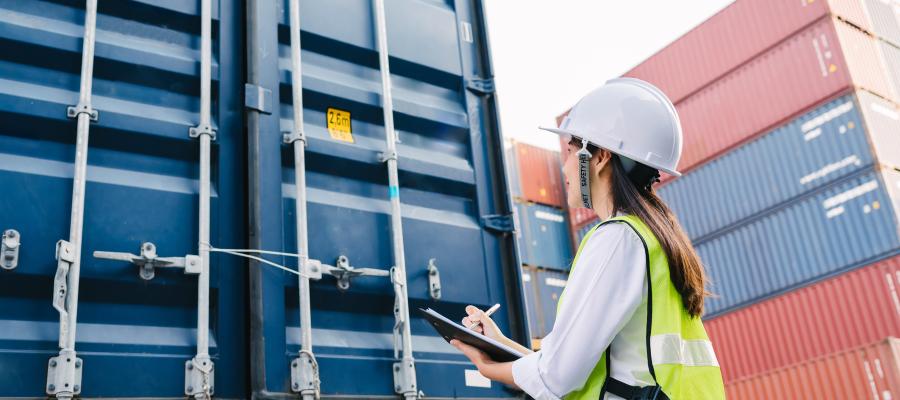
Ports have traditionally been male-dominated workplaces. Across Malaysia, women hold 14.5% of corporate positions in ports and make up 38% of technical-level employees. At PTP, as roles evolved, more women moved into them. ‘In 2018, the first woman marine harbour pilot in Malaysia embraced the opportunity to get her licence and started working with us,’ Majidah says. ‘Today, five of our 30 harbour pilots are women. PTP has also trained its first woman Quay Crane Operator.’
Women have also trained as prime mover drivers and RTG operators through the same programs as their male colleagues, and about 200 now work in these roles at PTP. For the women, this means skilled, stable careers in an industry that was once largely closed to them. For PTP, it supports the transition. ‘Women stay longer and have lower turnover,’ Majidah says. ‘That means less time spent recruiting and training new people.’
PTP set up a dedicated sustainability unit in 2023 and published its first sustainability report that same year. Gender diversity is being built into the port’s wider business strategies, and a new Gender Inclusion Roadmap sets out how PTP will increase women’s representation at all levels, including leadership. ‘There are more women in senior management now, and they’re inspiring and serving as role models for women at every level,’ Majidah says.
The physical workplace is changing too. ‘The port environment was traditionally set up to suit only men,’ Majidah says. PTP has introduced new measures such as nursing rooms and is setting up private rest areas, with plans for on-site childcare so carers can join the workforce, stay longer and do their best work. ‘This makes business sense for us,’ she says. Flexible working arrangements have also been introduced to foster a more supportive work environment. In addition, employee feedback mechanisms and working groups give women a dedicated channel to share ideas, raise concerns and provide input to management, helping ensure the workplace continues to evolve to meet their needs.
PTP’s transition is part of a wider regional effort. ‘No port can decarbonise on its own,’ Majidah says. ‘Ships move between ports every day, so the fuels, safety standards and skills have to line up across the region. Working with partners like P4I helps us strengthen that alignment.’
PTP is also working with the Port of Melbourne on a green shipping corridor that supports alternative fuel trials, an example of how collaboration between Australia and Southeast Asia can help speed up change across shared trade routes.
But for Majidah, the transition is ultimately about people as much as technology. New fuels and equipment require new skills, creating opportunities for workers to participate in and benefit from the shift. ‘We’re bringing in more engineers, including women, to be part of the decarbonisation journey,’ she says. ‘No one should be left behind.’
If you are interested in partnering with us, please get in touch. Using P4I's flexible, innovative tools and diverse global expertise, we are confident we can design a response that is tailored to your needs.