If you are interested in partnering with us, please get in touch. Using P4I's flexible, innovative tools and diverse global expertise, we are confident we can design a response that is tailored to your needs.

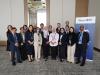



To mark World Maritime Day 2026, P4I asked Clare Grandison, Principal Advisor – Decarbonisation and Industry Transformation at Maritime Industry Australia Limited (MIAL), to talk about what it will take to turn maritime decarbonisation ambition into delivery. MIAL represents about 70 Australian maritime industry members. With support from P4I, it has welcomed delegates from Malaysia, the Philippines, Thailand and Vietnam to its annual Decarbonisation Summit in both 2025 and 2026, creating valuable opportunities to strengthen collaboration between Australia and Southeast Asia on decarbonisation.
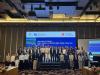
Clare recently shared her perspective on industry-government collaboration at the ASEAN Future of Maritime Conference 2026, co-hosted by P4I, the Philippines Department of Transportation, and the ASEAN Secretariat. While some uncertainty remains around elements of the International Maritime Organization (IMO)'s regulatory pathway, particularly the Net-Zero Framework, recent disruptions in the Strait of Hormuz have underscored the critical importance of secure maritime and energy supply chains for Australian and Southeast Asian economies, industries, and communities that rely on them.
"IMO and national decarbonisation ambitions provide the overarching direction," Clare says. "The focus increasingly needs to shift from where we need to go to how we create the conditions to get there." For an industry built on long asset cycles, that means giving operators, ports and financiers the policy and regulatory confidence to commit capital to fuels and infrastructure that may take time to pay off. “As Mr Meneleo Carlos III from the Philippines shipbuilding industry pointed out during the conference, the ships being built today are likely to remain in service until 2050, the year many countries aim to achieve net-zero emissions.”
Australia and Southeast Asia are deeply connected through maritime trade, supply chains and energy markets that cross borders. Ships move between jurisdictions constantly, which means the fuels, infrastructure, regulation and safety systems that support them can't be built in national silos. "Greater regional cooperation and interoperability will be critical," she says.
Progress has been uneven: the interests of shipowners, fuel producers, ports and investors don't naturally align. Ships need access to new fuels. Fuel producers need credible, durable demand before they build supply. Ports need confidence before committing to new infrastructure. And investors need assurance that all these elements will fall into place. Collaboration between industry and government is the way to break that deadlock, giving each part of the chain enough confidence to commit alongside the others.
Asked what governments should prioritise, Clare points to the fundamentals:
Australia's recently released Maritime Emissions Reduction National Action Plan (MERNAP) offers a framework for government and industry to work through these questions together, while emerging cleaner fuels policies create a chance to build both supply and demand at once. "Maritime needs to be integrated into these emerging fuel markets from the start, rather than left to compete for whatever low-emission fuels other transport sectors don't use," says Clare. Jonathan Abrahams from DNV Australia-New-Zealand, who also spoke at the conference, observed that the aviation industry has been more successful in bringing stakeholders together through consortia to create demand, whereas the maritime sector is not yet as advanced.
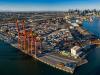
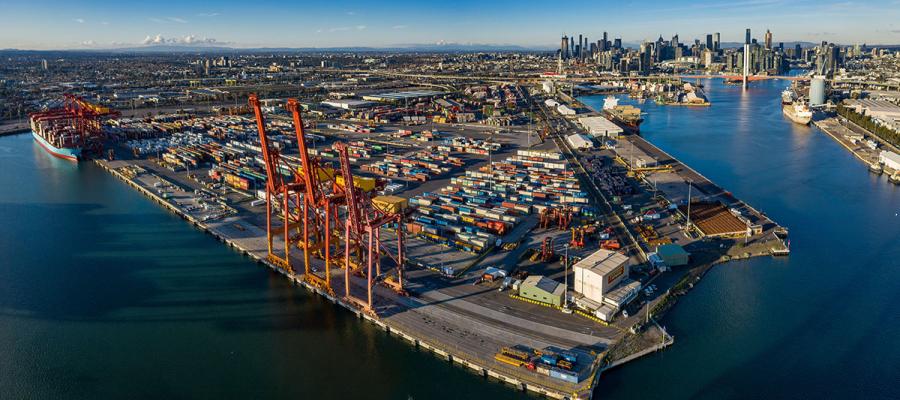
Clare sees ports evolving well beyond their traditional role as cargo gateways, into hubs that connect shipping, fuel production, infrastructure and industry. That shift opens the door to alternative fuel production, bunkering and green shipping corridors. Such initiatives are already emerging between the Port of Melbourne in Australia and the Port of Tanjung Pelepas (PTP) in Malaysia, and between the Port of Melbourne and the Maritime and Port Authority of Singapore. Both partnerships are supporting alternative fuel trials and demonstrating how regional collaboration can help accelerate the transition.
A message that clearly resonated throughout the ASEAN Future of Maritime 2026 discussions is one that can often be overlooked amid conversations about fuels and infrastructure: decarbonisation is also a workforce challenge. New fuels and propulsion technologies will require new skills from seafarers, port workers, engineers, regulators and emergency responders alike. “As Majidah Hashim from PTP stressed during the event, the transition is about preparing both technical and corporate employees to operate safely and effectively in a changing industry,” says Clare. Training and safety frameworks must be developed alongside these technologies, not retrofitted after they have already been deployed.
Progress will depend on the strength of collaboration – between government and industry, and between Australia and its Southeast Asian partners.
If you are interested in partnering with us, please get in touch. Using P4I's flexible, innovative tools and diverse global expertise, we are confident we can design a response that is tailored to your needs.